
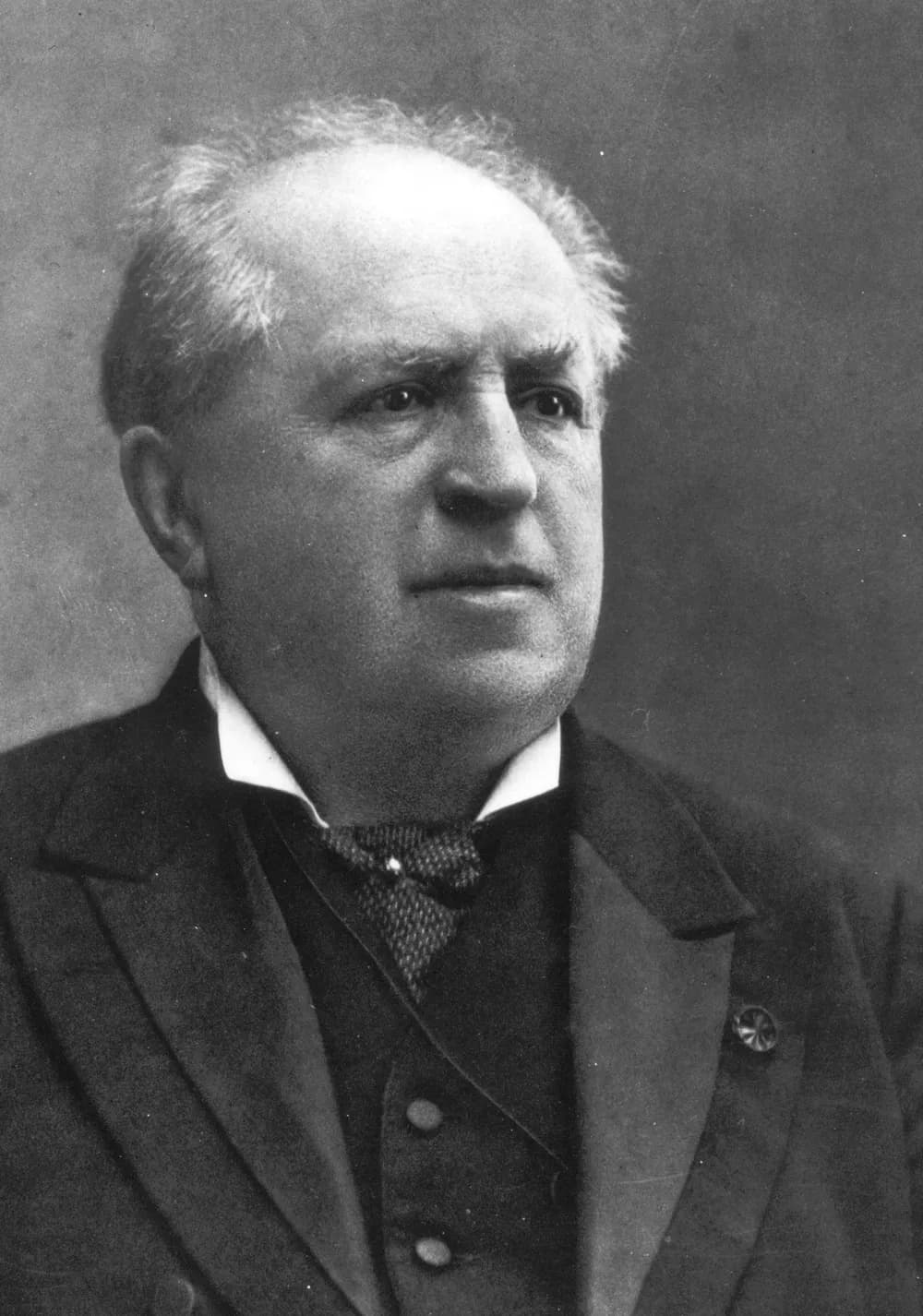
Abraham Kuyper was a remarkable theologian and thinker who built on John Calvin’s sixteenth-century teaching on the sovereignty of God, developing it further through his doctrines of sphere sovereignty and common grace. In doing so, he offered a comprehensive vision of God’s rule over all creation and a foundation for living out that vision in both the church and the world. Kuyper helped reform the Dutch church at a time of stagnation. He also founded and edited a newspaper that examined public issues from a Christian worldview, established a university dedicated to scholarship and teaching informed by Scripture, and founded a Christian political party. He went on to serve as a member of parliament and later as prime minister, profoundly influencing Dutch society through his Christian convictions.
Kuyper’s writings and his efforts to affirm God’s sovereignty across every sphere of life—including politics, economics, society, culture, and the arts—continue to have a profound influence more than a century after his death. Amid the sweeping changes and unforeseen challenges of the past century, Christians have drawn on his legacy to seek biblically grounded responses and put them into practice. Since 1998, the annual Kuyper Conference has brought people together to share research and practical insights inspired by Kuyper’s theology across the many fields and issues of our time.
The Korean church was introduced to Abraham Kuyper’s thought through theologians Hyung Nong Park and Yun Sun Park shortly after Korea’s liberation, and his continuing influence has been a great blessing. In particular, in the turbulent period of Korean society since the 1980s, when the Korean church was confined within the bounds of fundamentalism, prosperity theology, anti-communism, and secularism and could offer no answers, the Christian worldview movement grounded in Abraham Kuyper’s theology gave young Christians a vision of transforming the world through the gospel. This movement went on to bear fruit in many fields, including scholarship, civic activism, education, law, economics and business, human rights, politics, the environment, Korean reunification, and church renewal.
The 2027 Abraham Kuyper Conference in Korea will be an opportunity to share with the global church the fruits of forty years of the Korean church’s engagement in different spheres of society, inspired by Kuyper’s theology and a Christian worldview. It will also be a chance to acknowledge our shortcomings, learn through theological critique and reflection, and pursue renewal. To this end, approximately half of the conference presentations will focus on Korean society. Across ten areas, Korean practitioners will share case studies, Korean scholars will provide theological commentary, and leading international scholars will offer responses.
We hope to share as much as possible of what the Korean church has learned and accomplished through its engagement with Kuyper’s legacy. Yet we also recognize that we have even more to learn and much to reflect upon. The Korean church faces criticism from both within and beyond its own communities and is being challenged to reckon with its role in political and social polarization. Korean society is recognized around the world for its economic growth and the global popularity of Korean culture, yet it continues to struggle with deep inequality and ideological conflict. As we grapple with these challenges, we believe the theological reflections and practical experience of scholars and practitioners from different countries and fields, shaped by Kuyper’s thought in their own contexts, can offer valuable insights to the Korean church.
Of course, three short days cannot address all of these issues, and we cannot expect to find answers to every one of them in Abraham Kuyper’s legacy. Nevertheless, Kuyper’s legacy gives us an opportunity both to serve the global church by sharing the resources and experience we have gained and to learn from the questions, struggles, and practices of Christians around the world as we discern our own way forward. We warmly invite you to join us for this gathering, for which we give thanks to God.